(for the beginning of the Epiphany season)
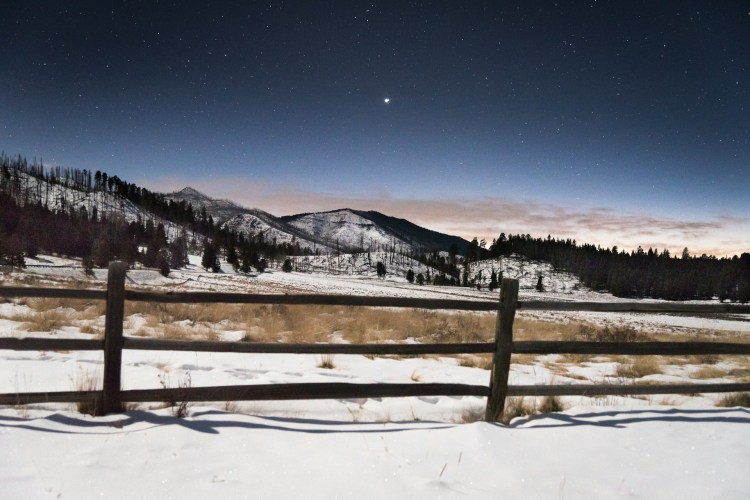
After Jesus’ birth—which happened in Bethlehem of Judea, during the reign of Herod—astrologers from the East arrived in Jerusalem and asked, “Where is the newborn ruler of the Jews? We observed his star at its rising and have come to pay homage.”….
The star which they had observed at its rising went ahead of them until it came to a standstill over the place where the child lay. They were overjoyed at seeing the star and, upon entering the house, found the child with Mary, his mother.
(Matthew 2:1-2, 9b-10b, The Inclusive Bible)
When the Magi followed a radiant star to Bethlehem, they didn’t really know what they were going to find. They believed that the star hailed the birth of a king. And their belief was strong enough to carry them over long distances and tricky terrain on a two-year journey. I bet they were surprised when the star stopped over the simple home of a carpenter with his wife and son. Is that why they stopped by King Herod’s palace first? I mean, who expects to find a king in an ordinary house?
When you follow a star, there ain’t much point in charting an itinerary.
My dad was a farmer, in a family of farmers, when a call to the ministry blindsided him and swept him off his carefully-charted course. He went to college to become an educated Southern Baptist preacher. A fundamentalist and segregationist, he expected his professors to give him proof texts—Bible passages—that backed what he already believed. But instead, his professors taught him that it was more important to ask searching questions than to have all the answers. And the Biblically-based preaching of Rev. Dr. Martin Luther King Jr. held a beacon in front of Dad’s face that he could not ignore or push away. Who would have imagined that this farm-boy from the Jim Crow South would find himself and his family targeted by buckshot for preaching and practicing God’s all-inclusive love?
And when I finally got around to writing a book about my family’s experiences, who could have predicted that I would fall in love and marry at the age of almost-70?
Like I said, ain’t no point in charting an itinerary when you follow a star. The same holds true when you follow the Spirit’s call. Or your heart.
Oh sure, sure—go ahead, make an outline about where you think you’re headed. But when it comes right down to it, you gotta be prepared to throw the outline out.

In 1969 Dad was on the final lap of his degree at the seminary in Wake Forest, North Carolina, when he was called to pastor a church about six miles west of town.
One late October afternoon, I was just home from school. The sun was sinking into a puddle of pale yellow behind the woods. As the light faded, the trees darkened, and their bare branches scratched thick black lines across the sky. The parsonage had been completed only a month before, and we were just beginning to settle into our new home.
My mother pulled me into the kitchen and sat me down at the table. She wanted to talk to me about the party my brother John and I were planning for December 13, 1969.
“You know, some people are going to be upset that you’re inviting Bettie and Jean, William, Mike and Silas, and Marjorie” —running down a list of some of my Black friends. “Are you sure you want to invite them?”
Ever since my freshman year in high school, I had thrown a party for my friends. But, before desegregation, all my friends were white. That changed when Black students—juniors like me—transferred to the mostly white high school. When I planned another party, naturally my new Black friends were on the guest list.
My mother’s question rankled me. Both our parents had taught me and my brothers that segregation was morally wrong—that all God’s children were equal in God’s eyes, regardless of race or color.
What is she saying?! Why is there even a question!
“Mom! If I can’t have a party with all my friends, I don’t want to have a party at all!”
“Yes,” she said quickly, “that’s what your father and I thought you would say, and we agree with you. We just want it to be your decision.”
*****
By the time December arrived, my dad had been the pastor of Ridgecrest Baptist Church for nine months. Church and parsonage sat out in the country, surrounded by an area known for stills and segregationists. People in that neck of the woods were none too pleased that Mom and Dad were allowing my brother and me to invite Black friends as well as white friends into our home. There were angry rumblings in the church. The deacons were anxious about possible damage to the parsonage, about loss of influence and respect in the white community. But most of all, they were outraged by the thought of Black and white teenagers socializing together—“mixin’”, as they called it.
The deacons called a special meeting to convince my father to cancel the party.
Dad pointed out that the party was not happening at the church, but in our home, the parsonage. He was not trying to force integration down their throats. He was not insisting that church members invite Black people into their own homes.
“But Shirley and I have been teaching our children to judge people on the content of their character, not the color of their skin,” he said, quoting Rev. King. “How do you suggest I tell them now that their friends are not welcome in our home because they are Black?”
One of the deacons piped up, “Well! If you allow this party to go on as planned, one thing’s for darn sure: we will ask for your resignation.”
“Well, I’m gonna do what I have to do,” Dad said, “and I guess y’all are just gonna do what you have to do.”
With that, the meeting ended.
*****
On the day of the party, twelve days before Christmas, a hearty fire crackled in the fireplace in the family room. The Christmas tree stood in the back corner, its brightly-colored lights slowly blinking on and off. Music was playing on the stereo, and my friends and I, along with my brother John, were mingling and enjoying the fire.
I was standing at one end of the room, chatting with William Lucas, one of my Black friends, and a white friend, Marjie Boal. The Fifth Dimension was singing, “This is the dawning of the Age of Aquarius, Age of Aquarius—”
BOOM. I heard an explosion behind me, sharp and sudden like a thunderclap. I spun around to see the wall’s wood paneling splintered, pockmarked with holes. I couldn’t make sense of what I was seeing. Maybe someone lit a firecracker and threw it behind the couch….
My father yelled, “Hit the floor! And cut the lights!”
At first nobody moved. My father yelled again, “HIT THE FLOOR!” And we dropped where we stood.
Only William was still standing. Looking down at us with a blank stare.
I grabbed his hand and pulled as hard as I could. It took all my strength to pull him down to the floor. He finally relented and lay down right beside me.
He never let go of my hand. We gripped each other’s hands so tightly that my fingers began to go numb. My birthstone ring bit into my skin. But neither of us loosened our grip. We hung onto each other waiting for the sheriff to show up.
The morning after the party was Sunday. At a special business meeting after the worship service, the congregation voted to fire my father. The deacons demanded that we move out of the parsonage as soon as possible.
I tried for decades to write the story of what happened on December 13, 1969, and the months that came after. But every time I spoke about it, I lost control of my voice. My breath shook my whole body. I felt as though I were carrying a vicious animal locked inside my ribs and rattling the cage. Years later, I learned what trauma was.
Then, in 2021, I managed to write 55 pages. I planned a trip to Wake Forest. I wanted to revisit old sites and interview former classmates. A Black friend threw a cookout at her house and gathered as many people from back then as she could.
The only person I couldn’t get in touch with was William Lucas.
Everybody told me that William was a recluse, that he never came to any of their events, never returned calls. A friend offered me his phone number. “Maybe you’ll get lucky…,” she said. I gave her my number to pass to him.
To my surprise, William contacted me. We made plans to meet in the spring of 2022. On April Fools’ Day.
We had not seen or spoken to each other in over 50 years.
*****
I don’t remember when or how William and I first met. Obviously, it was sometime after the beginning of fall semester 1969.
I close my eyes, and I can see him back then, leaning against the lockers in the school hallway, slim and fit. He wore a full Afro, always evenly combed out and immaculately shaped, and he was the epitome of kool, as in Kool and the Gang. His light brown eyes were deep and wary. He rarely looked directly at me, or anyone else. When he did, his gaze was piercing. I felt like he was sizing me up. He kept his thoughts to himself. And, like the fine basketball player he was, he appeared ready to move in any direction at a moment’s notice.
As one of the basketball stars from the Black high school, he caught the attention of my youngest brother Bryant. Bryant idolized the football and basketball players.
So, when Bryant saw me dancing with William at the school dance, it was a Big Deal.
The dance was in November, about a month before the party. The fluorescent lights in the school cafeteria were shut off, and strings of Christmas lights crisscrossed the ceiling. Parents and teachers, sipping punch and chatting, stood behind long tables of goodies. Dance music played over the school loudspeaker.
And that is about all I remember—except for when I danced with William.
He must have asked me to dance. Back in those days, I would never have even thought of asking a boy to dance. And I’m guessing that it took him a while to make up his mind to ask me. We didn’t dance until almost the end.
A slow dance—yes, it was a slow dance. But we didn’t hang on each other like teenagers sometimes did. We stood close to each other, but our bodies didn’t touch. His arm encircled me. My left hand was on his shoulder, my right hand rested in his left. I remember noticing his hands. Beautiful hands, with long tapered fingers and slender wrists.
Some of our white classmates may have been staring—Black classmates, too, no doubt. Their reactions, if any, flew right past me without landing.
William and I didn’t talk. He fixed his gaze over my shoulder, and I looked straight into the breast of his dark jacket.
Dancing with him is the single memory I have of that event.
Bryant burst in to tell me that Mom was outside, it was time to go home. Then he dashed back out to the car.
“Momma, Momma! Karen’s dancing with William!”
Mom shushed him. “Don’t say it so loud.” He looked confused. “People will think that you think there’s something wrong with it,” she added.
He frowned. “Is there something wrong with it?”
His confusion broke her heart. In his eyes, all that had happened was that I had racked up some major cool points for dancing with a star on the basketball team. It didn’t register with him that someone might object because William was Black, and I was white.
*****
Before our April Fools’ Day meeting, I was told that, in college, William was heavily into the Black Power movement. Edgy, aloof, he called himself the Mad Black Poet, and he didn’t hang with white people much.
I wasn’t sure what to expect.
We met in the park across the street from his home—the house he was living in at the time of the party. As we walked toward each other, I noticed he was taller than I remembered, and heavier, but I recognized his cool gait, the cool slump to his shoulders, his arms held slightly away from his body as if preparing to intercept a pass.
We moved to a green picnic table under a shelter and sat on the same side, half in, half out of the sun. The air was chilly, too cold to take off my coat.
His eyes were darker than I’d remembered. His gaze was direct, present. He had shaved his upper lip, and his skin, the color of milk chocolate, was smooth, unwrinkled. His full lips opened, and his face crinkled into a smile that was much friendlier than his hug.
I never ever remember seeing him smile, I thought to myself.
I asked him to tell me what he remembered about the party and about the desegregation of Wake County schools. But the conversation meandered into our personal histories over the last five decades.
As we talked, his eyes flared open. The words poured out in a torrent, and gestures punctuated every phrase. His hands were even more beautiful and expressive than I had remembered.
A few months later, he confessed to me that his heart was pounding, just like mine. He told me that he never forgot me after all those years, that he always felt we had “unfinished business.” His words.
We talked for three hours. Fifty-two years is a lot of unfinished business. We barely broke the surface.
We met again a week later. When I went home to Georgia, we began to text each other regularly, then more and more often. On my next visit, he cooked dinner for me. We talked and played a board game for nine hours. The texts flew back and forth.
After failed marriages, both of us had sworn that we would never, ever, marry again. But by late September, it was obvious where we were headed. We talked tentatively about me moving to Wake Forest—even, possibly, moving in with him. When he texted, “My dearest Karen, I am Seriously Thinking about someday asking you to MARRY ME,” I texted back, “My dearest William, I am Seriously Thinking about someday saying Yes.”
The pace feels breathless, but we were in our late 60s and head over heels in a way neither of us had expected. And after 52 years, there was no time to waste.
William proposed marriage to me on Christmas Day, 2022. We opted for a quiet, at-home ceremony. Our families and a few friends were invited to come, either by video call or in person. Ages 69 and 70, we were married at the end of January 2023.
Upended expectations. The Magi expected to find a king in a palace. My dad expected to be given support for what he already believed. And me? Well, I hoped to write a book one day—but I never expected to fall in love and marry.
The best thing to do if you’re following a star, I’m learning, is to abandon your preconceived ideas of where you’re headed. Let go of expectations. Just lay that darned itinerary aside.
Who knows? You may find something better than anything you expected.
 holy discomfort: Love letters from a reluctant Christian
Beautiful,K. I’m glad to hear more of the story. I was thinking about writing you because I hadn’t heard from you
LikeLike
Hi Leslie, I’ve been so deep into completing the book that I neglected my other writing. But I’m coming back to a more consistent presence. Hope you and Mark are well!
LikeLike
Happy new year! Love your writing and stories, thank you for this generous share.JulieJulie Gieseke MA, CPCCUNFURLConsultant, Writer, Performerwww.JulieGieseke.comPlease sign up for my monthly message:https://www.juliegieseke.com/contact
LikeLiked by 1 person
Thanks so much, Julie!
LikeLike