My husband can take canned vegetables, like green beans or spinach, and make you swear they were fresh when he started.
While this is a skill you may never see celebrated on cooking channels, it sure enough works for us.
Our plates are the orphaned lids of Tupperware containers. The cup that holds melted butter for the cornbread has been reclaimed from a grape drink mix.
“I don’t waste anything,” he says. “I get it all!”
I dub him Chef William, Maison Lucas.
He prefers the self-chosen moniker Black Ass Cook.
William Lucas and I met in high school in the fall of 1969, when the schools in Wake Forest, NC, were just being desegregated.
Somehow we became friends, which surprises him even now.
“I did not come to the white high school to make friends,” he says. “I came over to fulfill a language requirement for University of North Carolina, Chapel Hill.”
He was one of four Black friends who attended my annual party in 1969 – which was interrupted when buckshot ripped through my family’s home. William and I lay on the linoleum floor in the dark, side by side, gripping each other’s hands, waiting for the sheriff to show up.
After my family moved away, he and I lost touch. When we met again face to face in 2022, we had not seen or heard from each other in 52 years. But neither of us had ever forgotten the other.
We married in 2023.
In the 1990s, William moved back to Wake Forest, to the house where he grew up. He looked after his aging parents in the final years of their lives. After they died, first his father and then his mother, he continued to live in the house, alone.
Before we reconnected, the stove/oven shorted out, and there was no money to replace it.
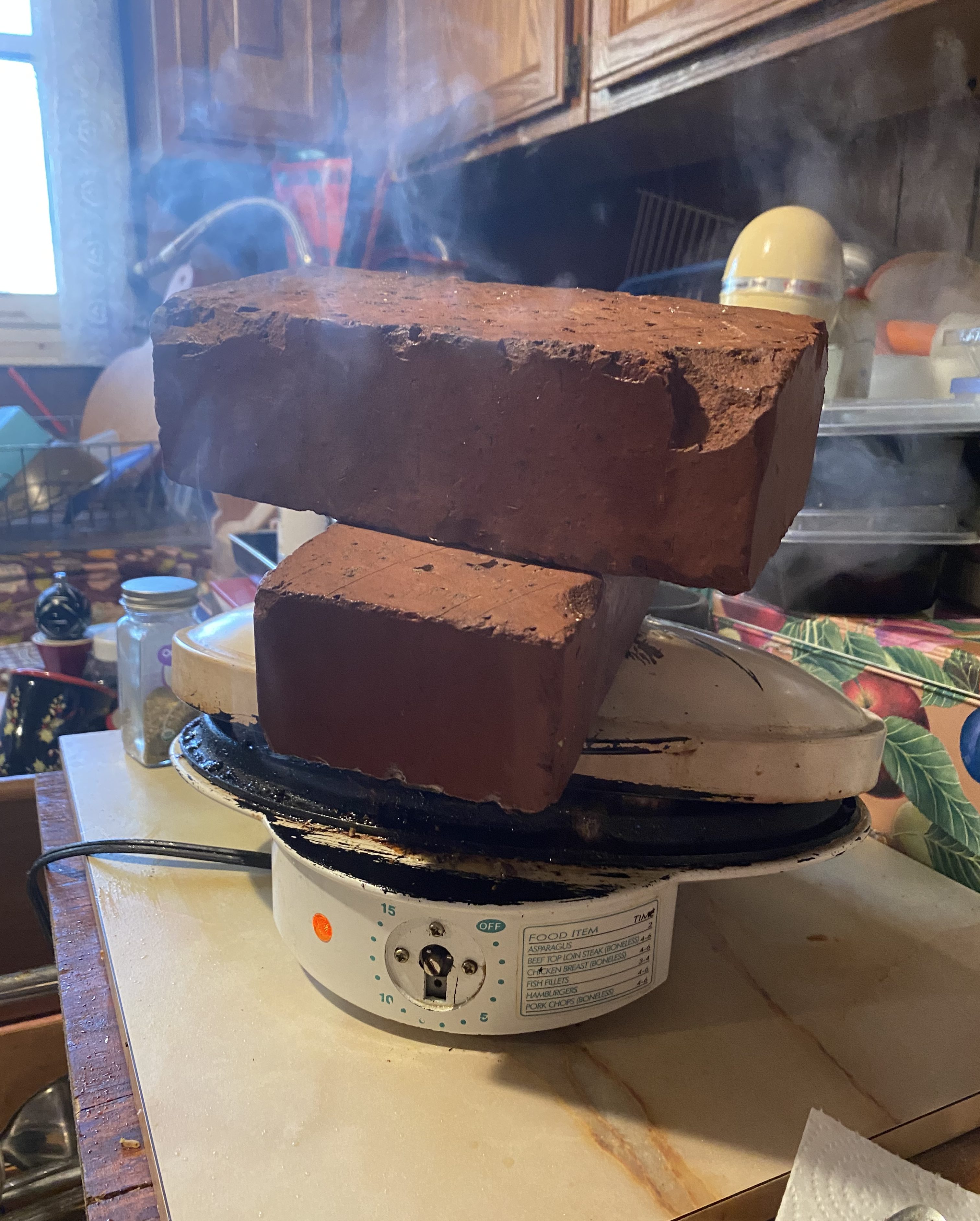
No problem. William turned an old-fashioned iron – the kind with only two settings, On and Off – upside down between two bricks and used that for a burner. He supplemented the iron with a counter-top grill from the late 1980s or early 1990s. The knob was long gone; he used pliers to regulate the heat. And to keep the heavy lid closed, he piled bricks on top.
With these two appliances, he fixed a meal that made my mouth water and my heart flutter. The grilled chicken leg-quarter had just the right amount of char. He had slipped a slice of onion and a tablespoon of butter under the skin before putting it on the grill, and the flavor was outta sight. He served the chicken with a side salad of crisp romaine lettuce, topped by chopped onion, tomato, cucumber, and some bacon bits he’d retrieved from a salad kit.
He really didn’t have to work that hard – I was already head over heels in love with him.
William’s culinary skills have deep roots in the way his mother and father raised him and his younger brother, Mike.
For one thing, neither of their parents believed that cooking and preparing meals was “women’s work.”
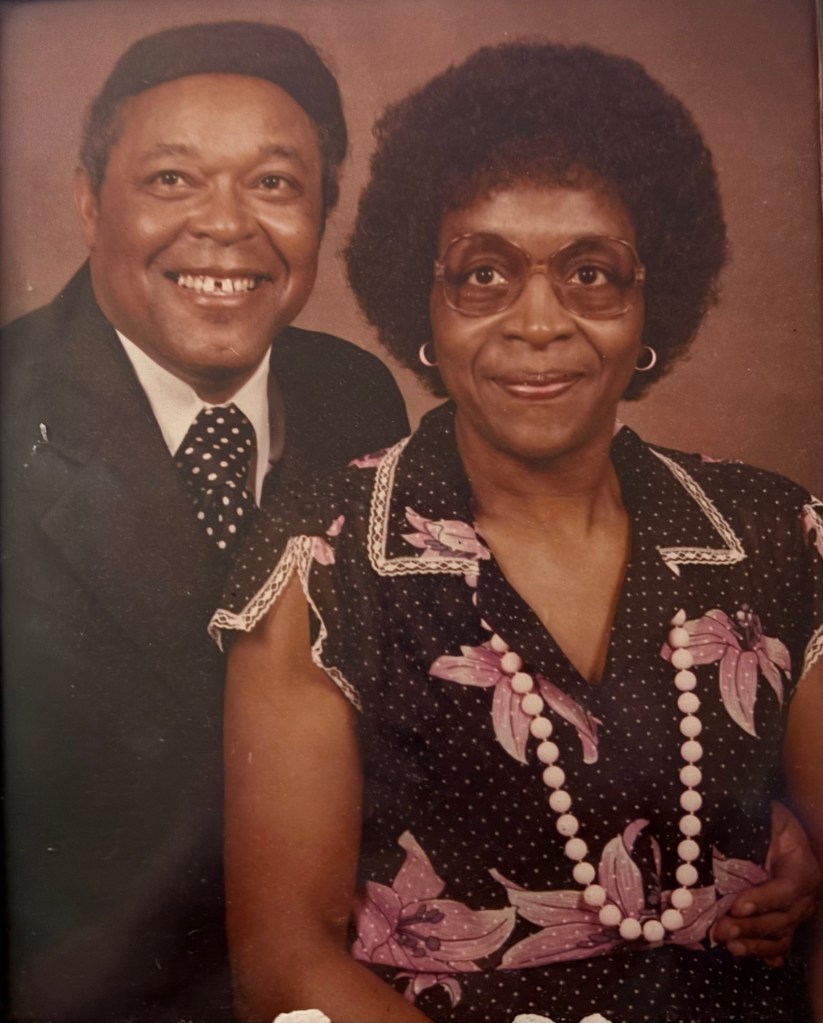
In the mid-1960s, Mary Ella Lucas became the first Black bank teller in downtown Wake Forest, North Carolina – the first Black person, period, to work in the Central Carolina Bank system. “Chick” Lucas worked for a dry-cleaners all his life, from the age of 18 until he retired at 65.
Since Mr. Chick arrived home earlier than his wife, he was often the one who cooked the meals. William tells me that, on Friday evenings before basketball games, the whole team from the all-Black W.E.B. DuBois High School would gather at the Lucas home, and Mr. Chick would fix them franks and beans. It was a tradition.
On Saturdays, Mr. Chick made chicken pastry – what my family used to call chicken and dumplings. He’d buy a whole chicken and chop it into pieces. (“Back then, you couldn’t buy packages of legs or breasts,” William reminds me.) Mr. Chick plumped up the chicken parts by soaking them in milk overnight and then cooked them slow, so they came out juicy and tender.
Ms. Mary Ella cooked her chicken fast and without soaking, and while it came out flavorful, it was sometimes dry. She was miffed at first that her sons preferred their father’s chicken, but eventually she came around.
“Don’t get me wrong,” William says, “my mom was an excellent cook. She was famous for her homemade biscuits and her potato salad.”
And she was adaptable. William could not bring himself to eat salmon, or any fish with bones. Just for him, she would prepare a filet of flounder or some other fish. And to this day, he can’t stand mayonnaise, one of the ingredients in her potato salad. Her solution was to set aside a portion so that he could mix in the condiments he liked.
Most of all, Ms. Mary Ella was bound and determined that her boys would learn how to cook. Otherwise, she said, they’d be at the mercy of their wives. And what would happen if their wives upped and left?!
After she and Mr. Chick had taught them the basics, she would take William and Mike to the grocery store on Friday and let them pick out whatever they wanted to eat. They became responsible for preparing and cooking their own Saturday meals.
And – I’m here to testify – both grew up to be first-rate cooks.
When I moved in with William, we bought a two-burner hot plate to replace the overturned iron.
“Now I can cook two dishes at the same time!” he said.
William does all the cooking and grocery-shopping. He is a wizard when it comes to finding deals. He can search through a pile of $40 hams and find a good one that has been marked down to $9. He shops at three different stores, and he knows who has the largest bags of frozen fish and the best deals on mustard, ketchup, and barbecue sauce, among other things.
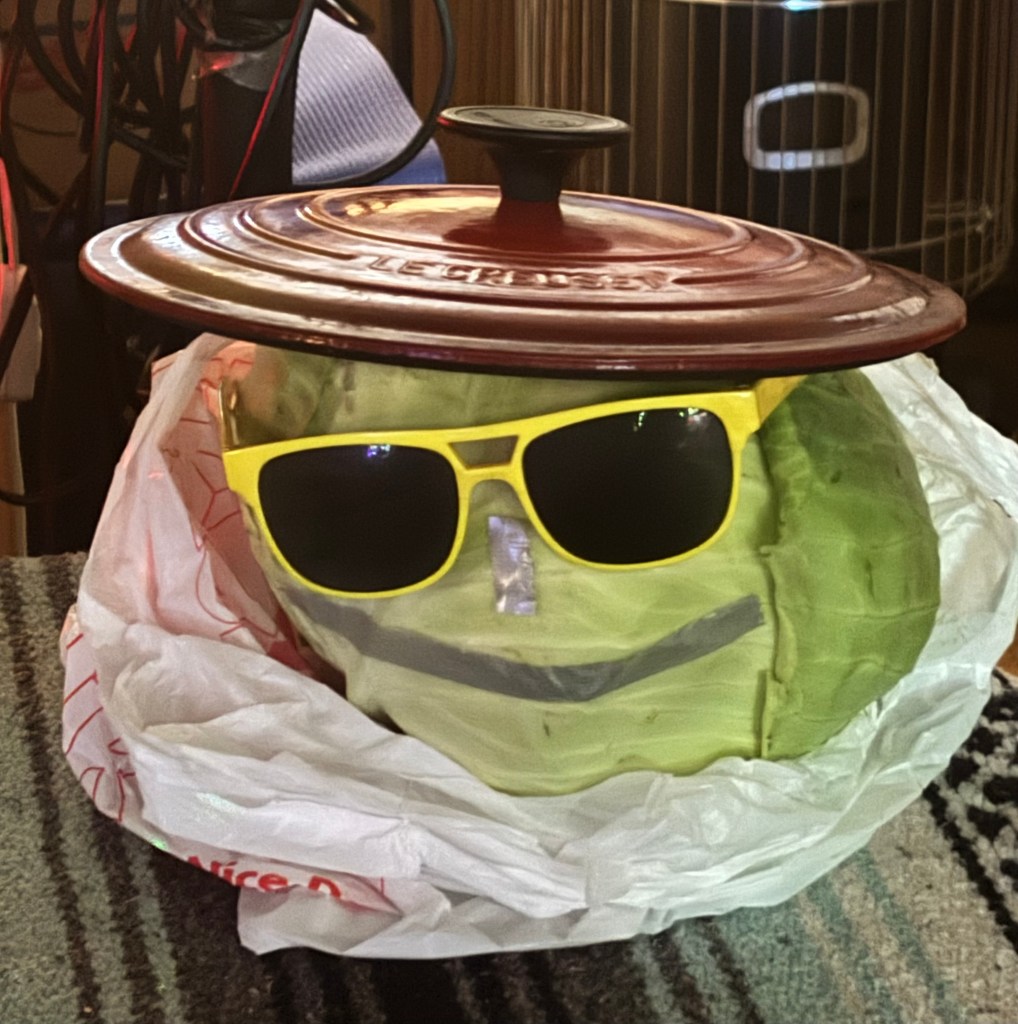
William also goes foraging at the local food banks. He comes home with food that everyone else leaves behind: bags of government beef, cans of ground pork, enormous loaves of American cheese. Heads of cabbage and fresh lettuce, tomatoes, potatoes, onions. Sometimes zucchini or butternut squash.
He loves spices – “I ain’t afraid-a no allspice!” he says – and combines spices and herbs in ways I never imagined.
Like his father, William soaks chicken – and pork chops and fish – in milk overnight before he cooks it. When he’s ready to cook, he rolls it in cornmeal or flour. But, then – something his father never did – he plunges the coated meat into what he calls “an egg and water wash” and rolls it again in the cornmeal/flour, before popping it into the heated skillet. After the initial sizzle, he cooks it slow with the top on.
The crust comes out crunchy, and the meat is moist. No matter how thin or thick they are, his pork chops are the juiciest and tenderest I’ve ever eaten.
And just like his mother, William is adaptable. Gluten does awful things to my innards, so he has learned to use pure cornmeal and gluten-free flour. He takes the time to read the small print on all packaging to make sure nothing contains wheat.
But this is the thing that most astounds me: He never tastes anything he is cooking! He just feels when it’s right. He does not know what the meal tastes like until he sits down with me to eat it.
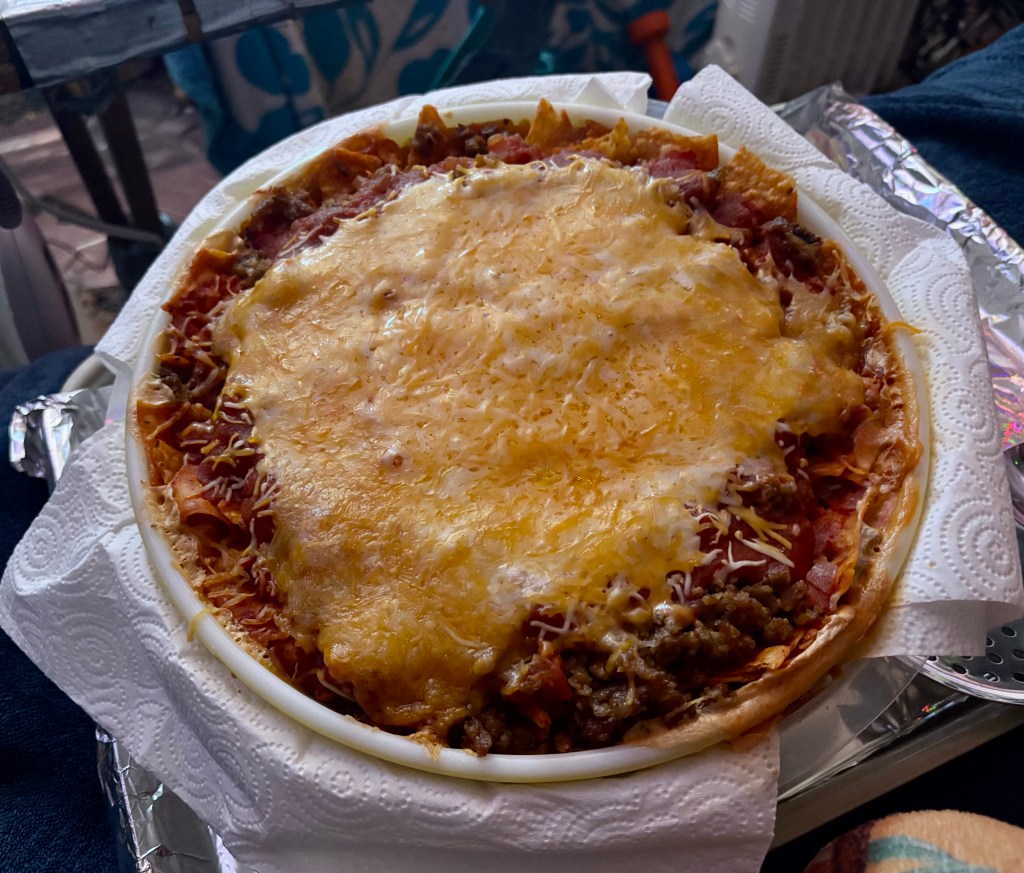
And hold up! I gotta tell you about William’s nacho casserole, or, as we like to call it, nacho-momma’s-casserole: layers of chips, shredded cheese, salsa, ground meat (turkey, pork, Italian sausage), refried beans, other beans (black, pinto, kidney, whatever we have, even chick peas), and whatever else he feels like adding. There is no particular order, because there is no recipe. He has added cream cheese on occasion, just because we had some.
He “fries” the meat for the casserole in water, removing most of the fat.
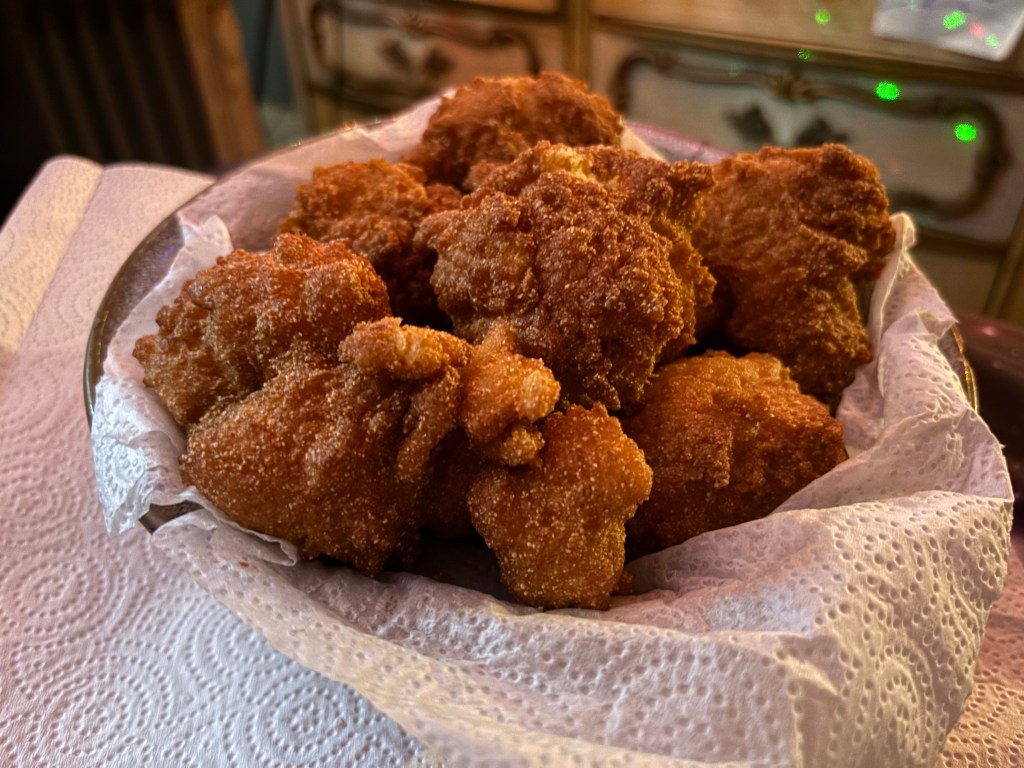
He cooks stove-top cornbread in a skillet. His gluten-free hushpuppies puff up as big as baseballs, crusty on the outside, soft and moist on the inside.
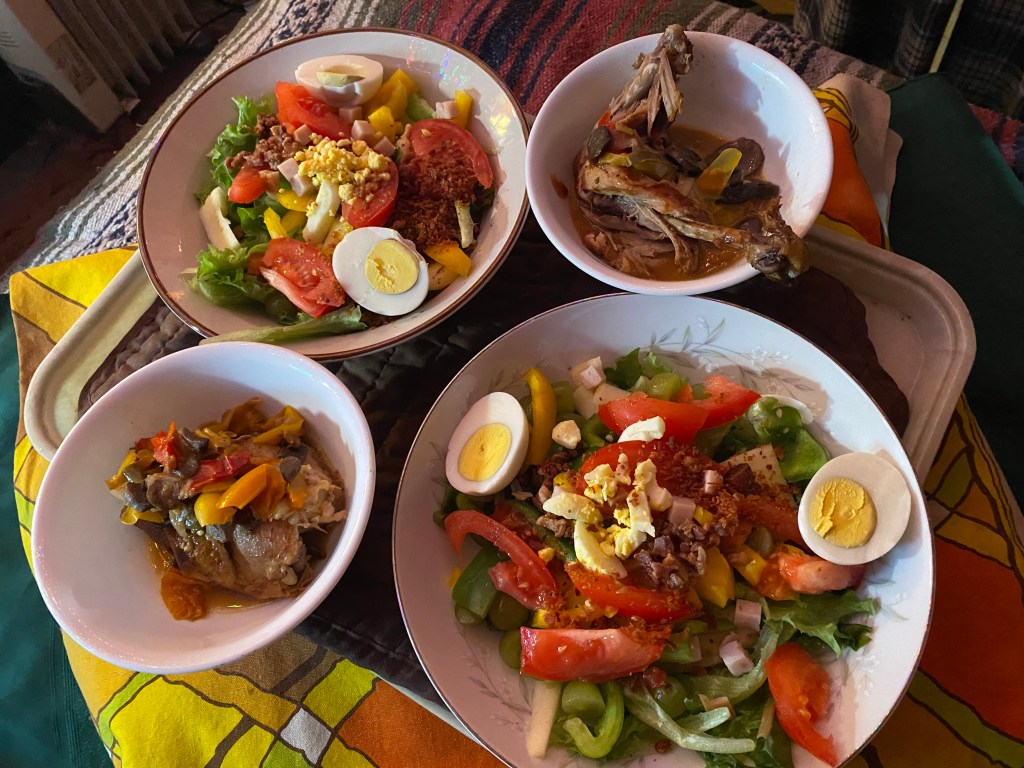
He creates ginormous salads into which he tosses every fresh vegetable and fruit that we have on hand, along with deli meat, cheese, canned corn, canned artichoke hearts, you name it.
Every month he prepares a feast for our “anniversary” celebration. –Read that again: every month. Because, at 73 years of age, we are aware that we are on the short end of the time line. We don’t want to wait for a whole year to roll around to celebrate our marriage.
Anniversary meals are top-secret. In the past they have featured pork chops and steaks, frozen clams, mussels, and fish, usually tilapia or swai. Homemade fries, mashed potatoes. Spinach, corn on the cob, mixed vegetables.
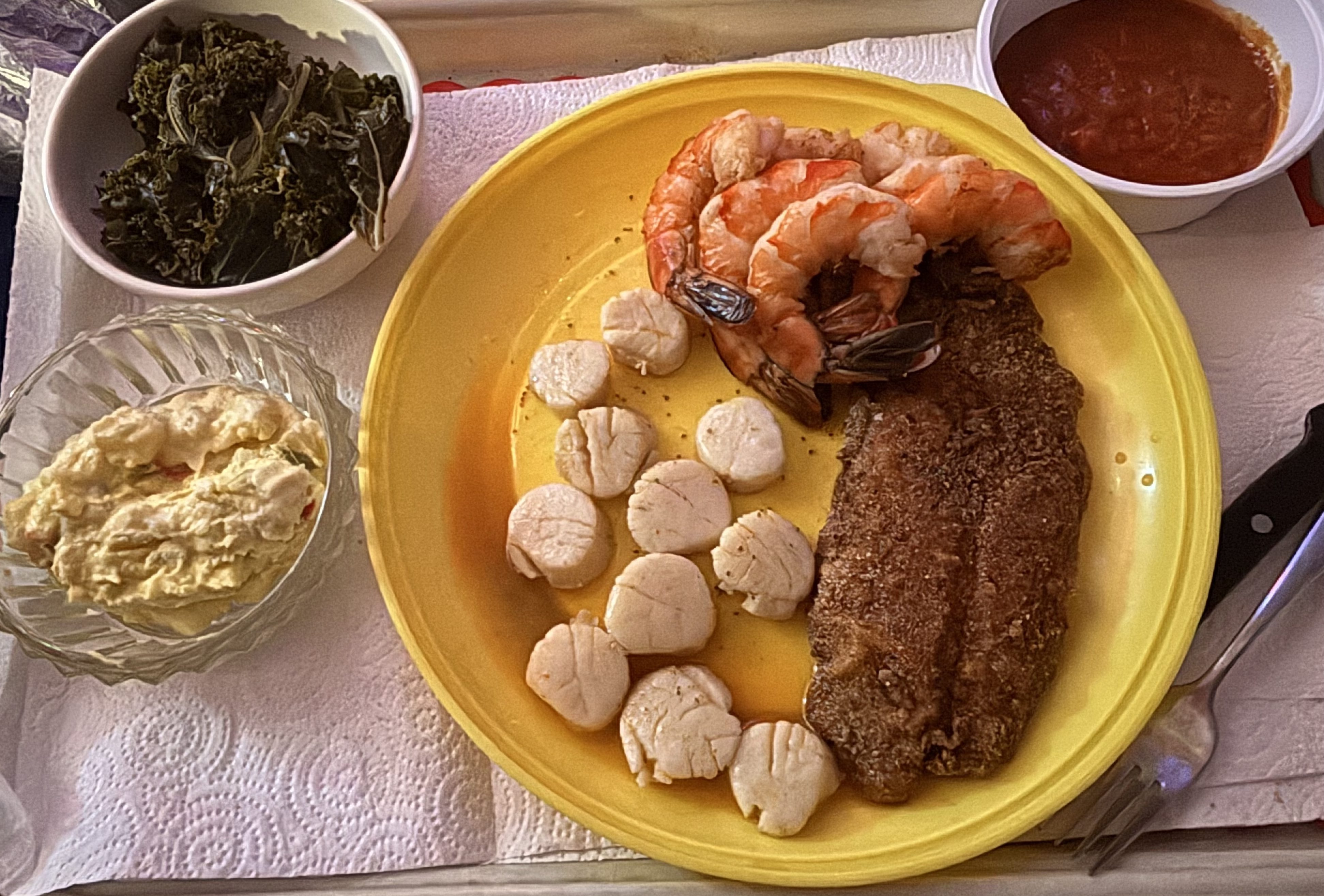
Sometimes the menu is determined by what’s on sale. One time he found a deal on scallops, another time on lobster tails, and although he had never cooked either before, William is nothing if not intrepid.
The one thing he will splurge on, when we can, is shrimp.
Is it any wonder that our meals are sacred, a ritual….
I had gotten out of the habit of saying a blessing before eating. But now it seems only right to begin with a prayer. We hold hands and thank Mother/Father God not only for the meal, but for our life together, our love, the blessings we enjoy, the challenges we have faced and the ones we continue to work through. Our prayers are playful – we laugh a lot – and, I confess, sometimes we get rowdy. We hold nothing back. And we don’t guard our language, because we figure God can handle it.
After we say Amen, the prayer continues in hums of satisfaction, exclamations of delight:
          This swai is gooder than a motherf*cker!

          Baby! what did you add to the cornbread this time, I
          love the texture.
The added ingredient, by the way, was cottage cheese.
I ask you: cottage cheese in cornbread – who does that?!
William Lucas, the Black Ass Cook.
Can’t wait to see what he’s cooking up for tonight.