What follows is an excerpt from my memoir From Where I Stand, a love story across time and race.
The place is Wake Forest, North Carolina. The time is summer of 2021.
The windows are down, the AC is off. The July day is hot, but not humid. The Carolina Chocolate Drops are wailing on the CD player:
I done all I can do
to try 'n' get along with you.
Still you're not satisfied....
Bettie, a former classmate and friend from high school, recommended the CD on social media. I’m planning to see her on this visit to Wake Forest, North Carolina. My first visit in over 20 years.
It is 2021–I turned 68 just last month. I am writing about an incident that happened more than 50 years ago. Seems strange to me that I am old enough to remember back half a century and more.
No matter how many years have passed, I find it difficult to talk about the party. But the time to write the story is now. Before my dad dies.
NC Highway 98 takes me past Ridgecrest Baptist Church—and there it is, exactly as I remember it, set back off the highway in a clear-cut field, its tiny steeple pointing sharply into the sky as if to pin it in place. Nothing appears to have changed since the last Sunday my family walked through those doors, after my dad was dismissed, and we were turned out of the parsonage.
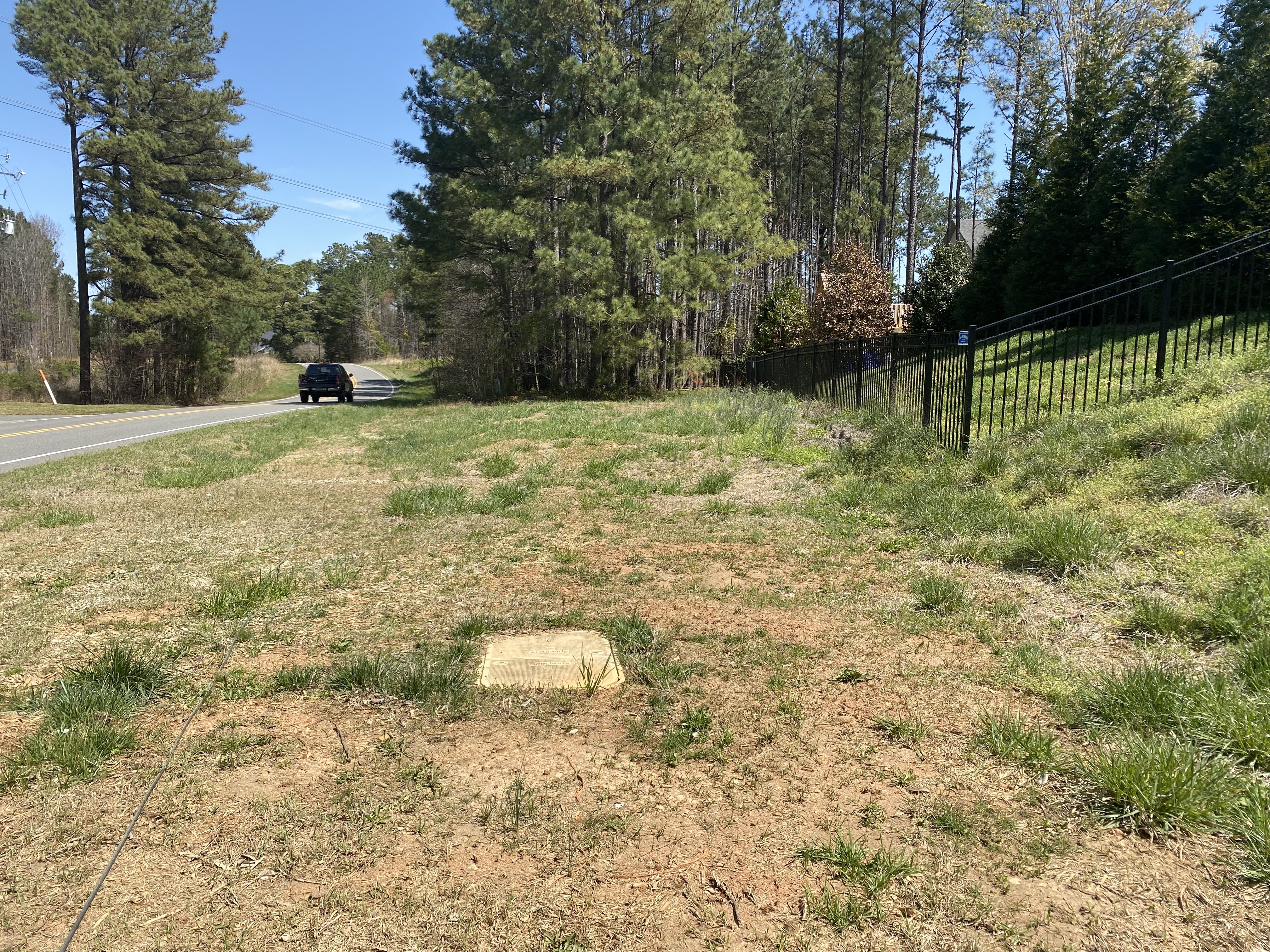
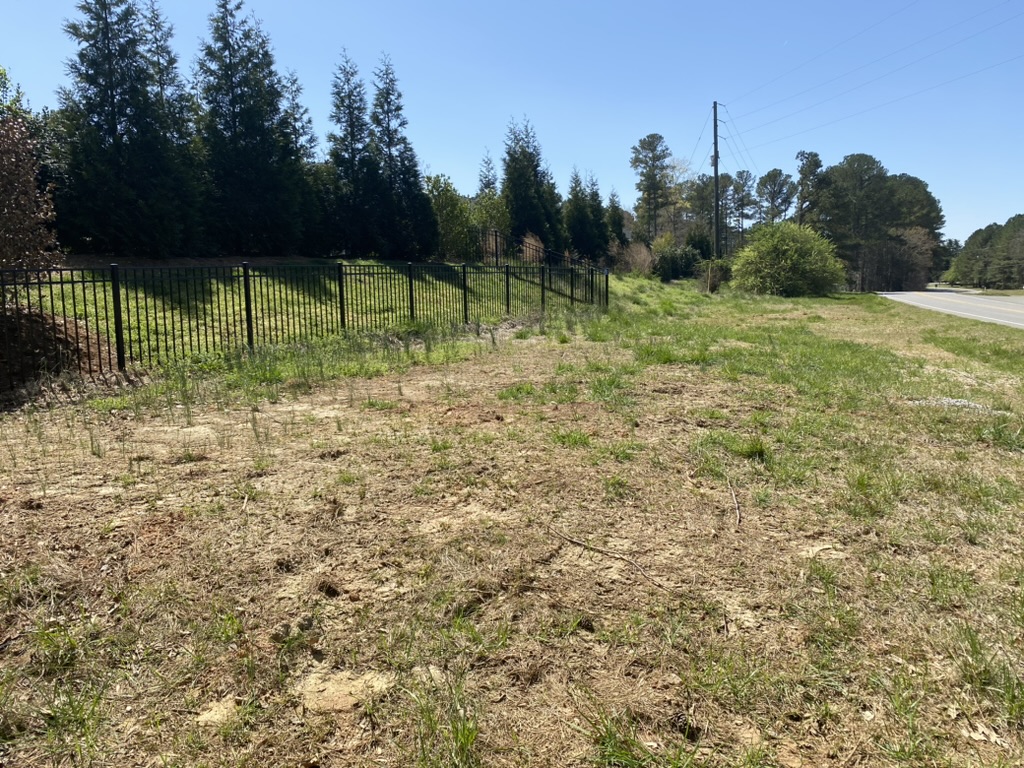
Speaking of the parsonage—I take a short detour and turn left onto Stony Hill Road, searching for a house that no longer exists. All that remains is a narrow lot to the side of the road, covered with patchy grass, the dirt studded with rocks and debris. A black iron fence cuts through the middle of where the living room used to be.
The house is gone, but it still stands at an intersection in my memory between innocence and experience—the carefully curated innocence of Whiteness, the bitter experience of racist violence.
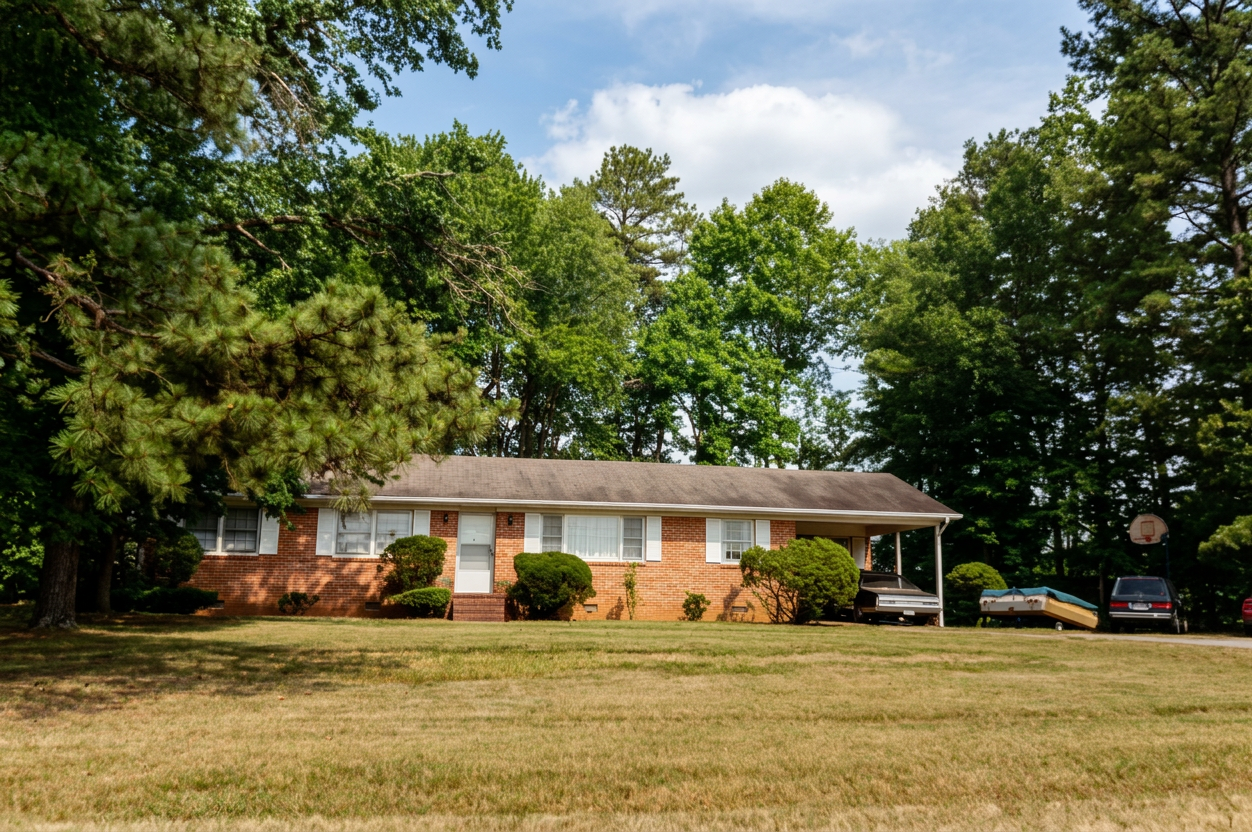
I am staying with old friends in town this visit. They were among the few white people who stood by my family in 1969 and 1970.
“This place has changed so much since you lived here,” they tell me.
They ain’t joking about the changes. Wake Forest is no longer the cozy seminary town, population 4,000, that my family called home in the late 1960s. Now, it is a bedroom community for Raleigh, Durham, and Chapel Hill, known as the Research Triangle, and more than 55,000 people live here.
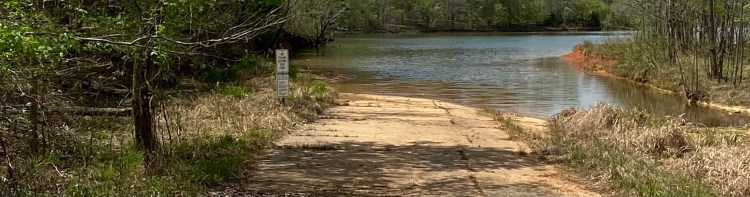
I remember NC Highway 98 as a country road coiling around old homesteads. But now it is a streamlined two-lane highway, level as far as the eye can see. The twists and turns of the route I knew lie buried deep under a reservoir, which was created when they dammed the Neuse River in the 1980s.
I remember gently rolling fields of tall grasses, golden in the late afternoon sun as I rode home from school, the hills dotted here and there with sometimes abandoned farmhouses. But now, there are clusters—can I even call them neighborhoods?—of oversized residences with tiny lawns. The houses huddle behind manicured hedges and black iron railings.
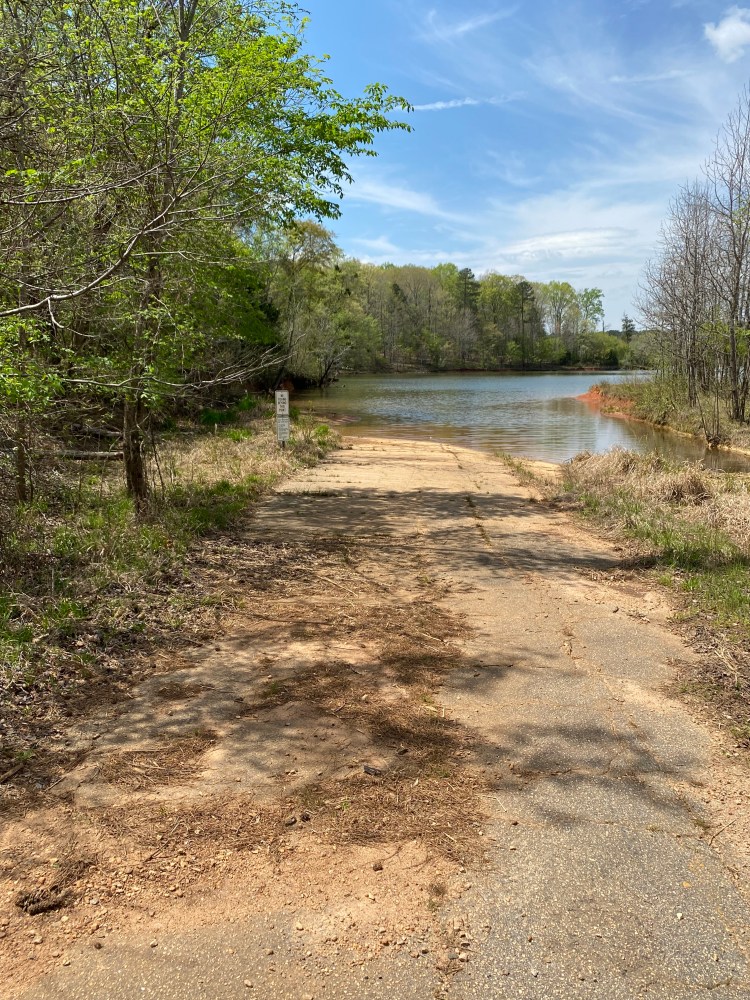
You can still see a remnant of the old highway where it dead-ends into a white metal gate. Beyond the gate, the road has been turned into a gravel-covered walking trail. Here and there, the pavement pushes up through the gravel, but the yellow and white center lines are now almost transparent. They lead straight to where the old road disappears beneath the muddy waters of Falls Lake.
I tell my white friends that I’m writing a book about what happened in 1969 and 1970.
They shrug. “So many new people have moved in…. It isn’t the same town anymore.”
They tell me, “No one remembers what happened back then.”
Bettie is planning a cookout. We became friends when she and about eight other Black juniors transferred to Wake Forest High School in the fall of 1969. She invites a bunch of our old classmates to sit and reminisce about those first years of desegregation.
The spread at Bettie’s house is sumptuous—not at all what I think of when I hear the word cookout. A large platter of salmon sits in the center of the kitchen island. Surrounding the salmon are salads and veggies of every possible description, both hot and cold. The desserts cover a separate buffet and include a rich banana pudding that Bettie made. I am tempted to skip the main course and go straight for the sugar.
Everyone there is Black, except for me and one white friend, Marjie Boal. I think Marjie and I are the only white classmates invited.
We gather around tables out on the back deck. Clouds cover the sky in thick gray clumps. The air is sticky, heavy with humidity, but the rain holds off. We talk, listen to music, laugh.
Soon after we sit down, the next door neighbors, an elderly white couple, come outside and start mowing the grass and trimming the hedge. Their machines buzz and saw through the sticky air. Bettie tells me they do this whenever Black friends gather on her back deck. We lean into each other and raise our voices, shouting and laughing over the noise.
I ask after William Lucas. Where is he? What is he doing? How is he doing?
William and I lost touch after my family moved away, but he was one of the Black friends who came to my party in 1969. I really want to get in touch with him to ask him what he remembers.
“He moved to Florida after he graduated college. Worked down there as some kind of therapist—”
“Yeah, but then he moved back, remember? To take care of his parents. Sometime in the 1990s.”
They tell me he returned to North Carolina with a woman he called “the love of his life.” The phrase gives me a twinge. Bettie tells me they were together 30 years. Sounds serious to me.
Now William lives alone, she says. The woman he was with died seven years ago. “And then his mother died a few years after that. I think that hit him pretty hard.”
Everybody agrees on one thing. Tubby—his nickname from childhood—keeps pretty much to himself.
“We invite him to things, but he never comes.”
“Sometimes he accepts the invitation and just doesn’t show up.”
“In fact, we invited Tubby to this cookout!”
But William is not there.
I don’t remember when or how William and I first met.
I close my eyes, and I can see him back then, leaning against the lockers in the school hallway, slim and fit. He wore a full Afro, always evenly combed out and immaculately shaped, and he was the epitome of kool, as in Kool and the Gang.
His light brown eyes, deep and wary, appeared to be looking out and in at the same time. Rarely did he ever look directly at me. When he did, his gaze was piercing, like he was sizing me up. He didn’t talk much, kept his thoughts to himself, never gave himself away to anyone, white or Black. And, like the fine basketball player he was, he appeared ready to move in any direction at a moment’s notice.
As one of the basketball stars from DuBois, he caught the attention of my 9-year-old brother Bryant. Bryant idolized the football and basketball players.
So, when Bryant saw me dancing with William at the school dance, it was a Big Deal.
The dance was in November, about a month before my party. In the school cafeteria, the fluorescent lights were shut off, and strings of Christmas lights crisscrossed the ceiling. Parents and teachers, sipping punch and chatting, stood behind long tables of goodies. Dance music played over the school loudspeaker.
And that is all I remember—except for when I danced with William.
He must have asked me to dance. Back in those days, I would never have even thought of asking a boy to dance. And I’m guessing that it took him a while to make up his mind to ask me. We didn’t dance until almost the end.
A slow dance—yes, it was a slow dance. But we didn’t hang on each other like teenagers sometimes did. We stood close to each other, but our bodies didn’t touch. His arm encircled my waist. My left hand was on his shoulder, my right hand rested in his left. I remember noticing his hands. Long tapered fingers and slender wrists.
Some of our white classmates may have been staring—Black classmates, too, no doubt. They were perhaps surprised, maybe shocked. Their reactions, if any, darted past me without landing.
William and I didn’t talk. At all. He fixed his gaze over my shoulder. I looked straight into the breast of his dark jacket.
Dancing with him is the single memory I have of that school dance.
Bryant burst in to tell me that Mom was outside, it was time to go home. Then he dashed back out to the car.
“Momma, Momma! Karen’s dancing with William!”
Mom shushed him. “Don’t say it so loud.” He looked confused. “People will think that you think there’s something wrong with it,” she added.
He frowned. “Is there something wrong with it?”
His confusion broke her heart. In his eyes, all that had happened was that I had racked up some major cool points for dancing with a star on the basketball team. It didn’t register with him that someone might object because William was Black, and I was white.
A month later, at my party, William and I lay side by side in the dark, flat on the floor of the parsonage. We clung to each other’s hand while we waited for the sheriff to show up.
After eating ourselves silly at Bettie’s cookout, the crowd moves into the air-conditioned TV room, and we plop down into comfy chairs.
Debra’s mother, Sula, points at me. “Oh–is this the white girl that had that party?” Everyone nods.
I ask if people still remember the party.
“Oh yes, they remember,” Pam answers, giving me a pointed look. “They act like they don’t. But they remember.”
It’s time to go. We pose for a group photo beside the two flags–Pride and Black Lives Matter–that Bettie and her husband James have hung from the back deck. The camera clicks two or three times while we smile into the lens. Bobby lifts his fist in the Black Power salute.
Jean offers to give me William’s cell phone number. “He doesn’t return phone calls, but maybe you’ll get lucky.”
I hesitate. “Listen—why don’t you give him my number. If he feels like talking to me, he can contact me.”
Back in my apartment in Georgia a few weeks later, I wake up one morning to a text:
Hi Karen...sorry i missed
seeing u...live well
and be the best version
of yourself!...Wm. Lucas
My heart races, stumbles, then catches itself, still racing.
You see, the truth is that sometime soon after I met him, William Lucas curled up inside my heart and never left.

