One of the Black singers said, “You know, it’s curious, but none of the white people I’ve ever met have ancestors who owned slaves….”
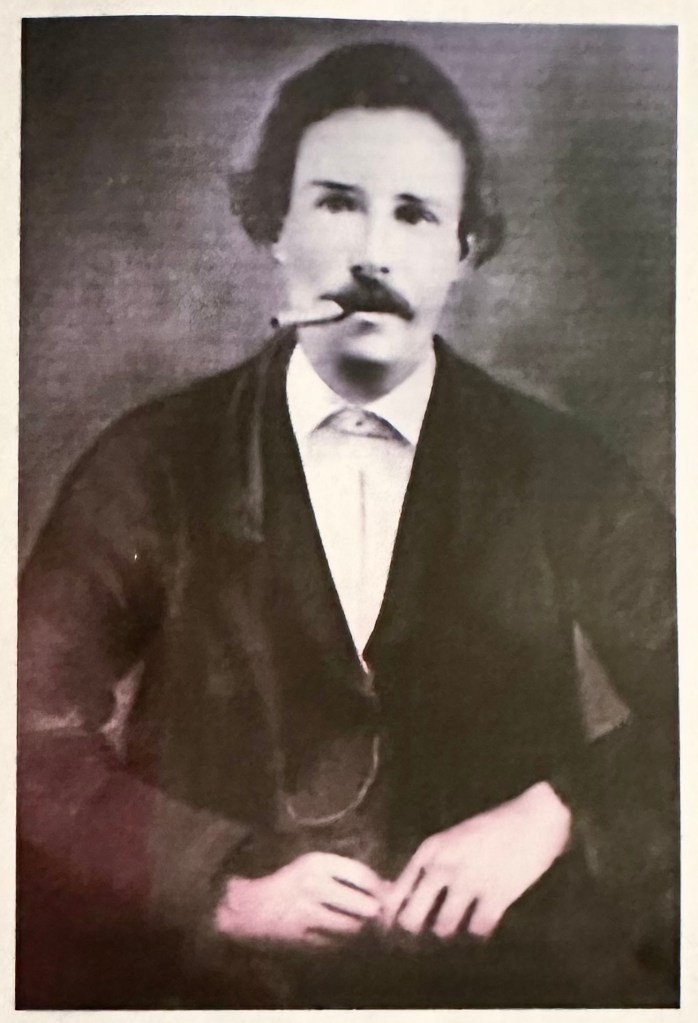
(Photo shared by George E. Robertson Jr. on Ancestry.com)
We stood outside Riverside Church in New York City after morning worship, a group of white and Black singers, all of us members of the Riverside Church Choir in the late 1980s.
One of the Black singers said, “You know, it’s curious, but none of the white people I’ve ever met have ancestors who owned slaves….” His eyebrow arched, and his mouth twisted into a wry grin. He looked at me out of the corner of his eye.
My thoughts tripped all over each other trying to escape: I never heard of anyone in my family enslaving Black people. Did anyone in my family ever enslave Black people? They were farmers in southeastern Virginia. But they were poor farmers. Weren’t they? They didn’t enslave anyone. Did they?
I blinked and laughed. I didn’t want to look like one of those white people.
I said, “Yeah, what are the odds.”
I kept my questions to myself.
Fast-forward to 2005. I opened an account on a genealogy website–but not because I was looking for the truth of my family’s history with chattel slavery. In fact, I had forgotten all about my Black friend in New York and his uncomfortable observation.
I wanted to find out where my mother’s grandfather got the name Lonzo.
Born Charles Lonzo Bryant, he was the son of North Carolina sharecroppers. In a society where land ownership was the measure of wealth, the records for sharecroppers are sparse. The only reason I know his parents’ names is that my grandmother recorded them in the Bryant Family Bible.
When Charles Lonzo left sharecropping, he studied to be an electrician, moved to the Tidewater area in Virginia, and ended up working at the Norfolk Navy Shipyards. At the same time he changed his middle name to Lawrence. Maybe the name Lonzo raised too many questions. It certainly did for our family.
But my recent DNA test makes it plain that my ancestors come from England, Scotland, and France, with some traces of Belgium, Germany, and Norway. My pale skin doesn’t lie, I am pure white bread.
I am ashamed to admit it, but I felt disappointed with the results. I had hoped to find something a little more…well, exotic. Which is exactly like the white folks who want to appropriate Black or Indigenous heritage and culture without any of the baggage of slavery and genocide.
And in case you are wondering, despite our best efforts, the mystery of Charles Lonzo’s middle name remains unsolved.

My mother’s maternal ancestors were easier to trace. French Canadian farmers who immigrated to the United States in the 1830s, they settled in upstate New York and remained there until after the Civil War. By the mid-1880s, they had worked their way down the east coast and settled in southeastern Virginia. Along the way the French surname Denis (de-KNEE) was anglicized to Dennis, then Denney.
There were no enslavers among the Bryants or the Denneys, as far as I could find.
And then, there was Nehemiah. Not the Biblical prophet. Nehemiah Shipp, my ancestor.
And then, there was Nehemiah. Not the Biblical prophet. Nehemiah Shipp, my ancestor.
The Shipps and the Murdens, my father’s family, settled in Virginia in the early 1600s and the late 1700s. By the time my dad was born, the Shipps had lived and farmed in Princess Anne County (now Virginia Beach) for ten generations. I had no difficulty finding records for them.
My 2nd great-grandfather Andrew Wesley Shipp (pictured above) and his half-brother Simon joined the Confederate States Army (CSA) in nearby Tanner’s Creek in 1862. They fought together in Gettysburg in 1863. Following the Confederate defeat, Andrew went “Absent without leave.” Simon was captured and sent to a Union prison for six months. When he was released around Christmastime that year, he was “sent north” and forbidden to return home until after the war.
Nehemiah Shipp is their father, my 3rd great-grandfather. Born in 1805, he died in 1867, two years after the end of the Civil War.
Two hints for Nehemiah popped up on my screen. The first was the 1850 Slave Schedule.
I opened the facsimile of the original document and scanned the left-hand column labeled “Names of Slave-owners.” Nehemiah’s name appeared about two-thirds of the way down the page. And there beside his name, there were three Black females, ages 45, 8, and 3, in the “Number of Slaves” column. The only identifications besides their ages, were “f” for gender and “B” in the column marked “Colour.” No names were listed. And there was nothing to indicate what relation, if any, they had to each other. They were reduced to straight black lines on the page.
I stared at the document on my screen for a long time. There it was, the evidence I had so long avoided.
I tried to see beyond what was written there, to imagine their lives, to see them as fully fleshed-out human beings.
Last November at my niece’s wedding, I met a statuesque Black woman who began playfully calling my niece “Cuz.” Among her mother’s relatives, she had discovered generations of Shipps who are Black. And many of their ancestors originated in southeastern Virginia.
“I’ve always wondered,” she said to me, “where I got these eyes.” She took off her sunglasses. Her eyes are hazel. Just like mine. We exchanged phone numbers.
I went back to the 1850 census when I got home and noticed that Nehemiah was 45 years old in 1850, the same age as the Black woman he enslaved. The children, 8 and 3 years old, were born in the same years as Andrew Wesley and a younger Nehemiah who did not live past the age of 3.
Were either of the girls Nehemiah’s offspring? It is a reasonable question. Enslavers were known to rape the Black women they enslaved.
Were either of the enslaved girls Nehemiah’s offspring? It is a reasonable question.
In the 1840 census, everyone was lumped together, “Free White Persons,” “Free Colored Persons” and “Slaves.” Again, beside Nehemiah’s name, there were three enslaved people listed, but this time one of them was a man or boy. A mark was put in each of three columns: male, 10-24; female, 10-24; and female under the age of 10. Again, no names. And nothing to indicate any relation they may have had to each other.
There were enslavers among my father’s maternal ancestors, too. The Murdens came to Virginia in the late 1700s. In 1830, John D. Murden Sr., my 4th great-grandfather, enslaved six Black persons, and one of his cousins enslaved ten people. For southeastern Virginia, those were high numbers.
And these are the statistics for my direct ancestors only.
I look at my ancestral lines spread like veins across the page. And my blood turns to ice water when I consider that I could qualify to become one of the United Daughters of the Confederacy.
I am lucky that I had parents who questioned the racism they were taught. But I was born and raised in a society molded and shaped by whiteness, for whiteness. I’ve gone through life with blinders on, mostly unaware of the ways that my white skin has benefited me. And I know there are things I still do not see.
“None of the white people I’ve ever met have ancestors who owned slaves….” My Black friend’s words from over three decades ago come back to haunt me.
I am now in my 70s. It took me the better part of a century to get around to asking and answering one simple question:
Did my ancestors enslave anyone?
No one in my family, including my parents, mentioned the possibility that our ancestors had enslaved Black people. Maybe they didn’t know–or rather, maybe they didn’t allow themselves to know. But, then, that’s what it means to be white.
Truth is, I never have to face the facts of my heritage if I don’t want to. White supremacy makes that possible.
Being white means I can live the rest of my life without knowing.
Being white means I can choose to put the past in a tiny box and store it in the crawl space under my brain. And I can say (if anyone asks), “That was back then. What does it have to do with me now? I didn’t enslave anyone. Isn’t it better to let bygones be bygones and start fresh?”
Truth is, I never have to face the facts of my heritage if I don’t want to. White supremacy makes that possible.
Which brings me right back to Nehemiah.
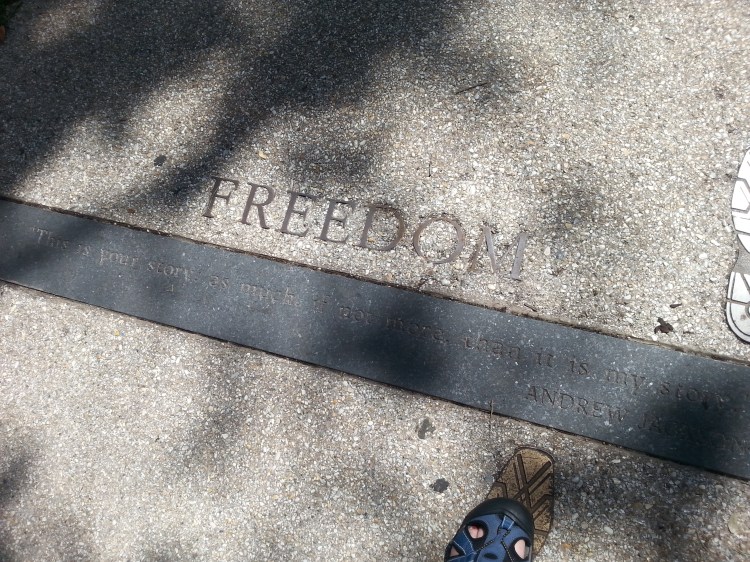
When I hear Black friends talk about honoring the ancestors, I confess, I’m envious. Their ancestors struggled against injustice and enslavement. Their ancestors took enormous risks to be free and to provide for the freedom of coming generations.
But my ancestors are the ones who farmed on land stolen from Indigenous people in Virginia. My ancestors are the ones who enslaved Africans and took credit for their labor. My ancestors are the people who abandoned their own cultures for the privilege of being white.
I am not here to honor Nehemiah and the others. Honoring is not what is needed.
What is needed is a reckoning.
I am not here to honor Nehemiah and the others. Honoring is not what is needed.
What is needed is a reckoning.
It would be easier not to know. It would be easier never to question the vague hope that my ancestors somehow stood outside the bitter history of this nation. It would be easier, because not knowing the truth would let me off the hook of doing anything about it.
It would be easier–and it would be a lie.
Until I reckon with the long shadow of the past, I will never be free, never be complete and whole.
And the truth is, as William Faulkner said, “The past is never dead. It’s not even past. All of us labor in webs spun long before we were born, webs of heredity and environment, of desire and consequence, of history and eternity.”
In a 1968 Esquire interview, James Baldwin put it this way: “White man, hear me! History, as nearly no one seems to know, is not merely something to be read. And it does not refer merely, or even principally, to the past. On the contrary, the great force of history comes from the fact that we carry it within us….” (emphasis mine)
“White man, hear me! History, as nearly no one seems to know, is not merely something to be read. And it does not refer merely, or even principally, to the past. On the contrary, the great force of history comes from the fact that we carry it within us….” – James Baldwin
The purpose of reckoning with Nehemiah and the others is not so that I can wallow in white guilt and shame. Knowing where I come from can help me discern the actions I need to take, the reparations I need to make, the internal and external work I need to do to undo the systems that this nation was founded on.
In 1885, almost two decades after Nehemiah died, a 15-year-old Black boy was lynched less than a mile from the farm I knew as MaMaw and Granddaddy’s farm. The jailer who absented himself while the mob broke into the boy’s cell was a Mr. Murden.
I am not Nehemiah. I am not Mr. Murden. But I have inherited the world they left to me, to all of us. And until we white folks get down to reckoning with our ancestors, we will none of us be free.

