Vincent was too busy excavating the ruins of his ministerial calling.
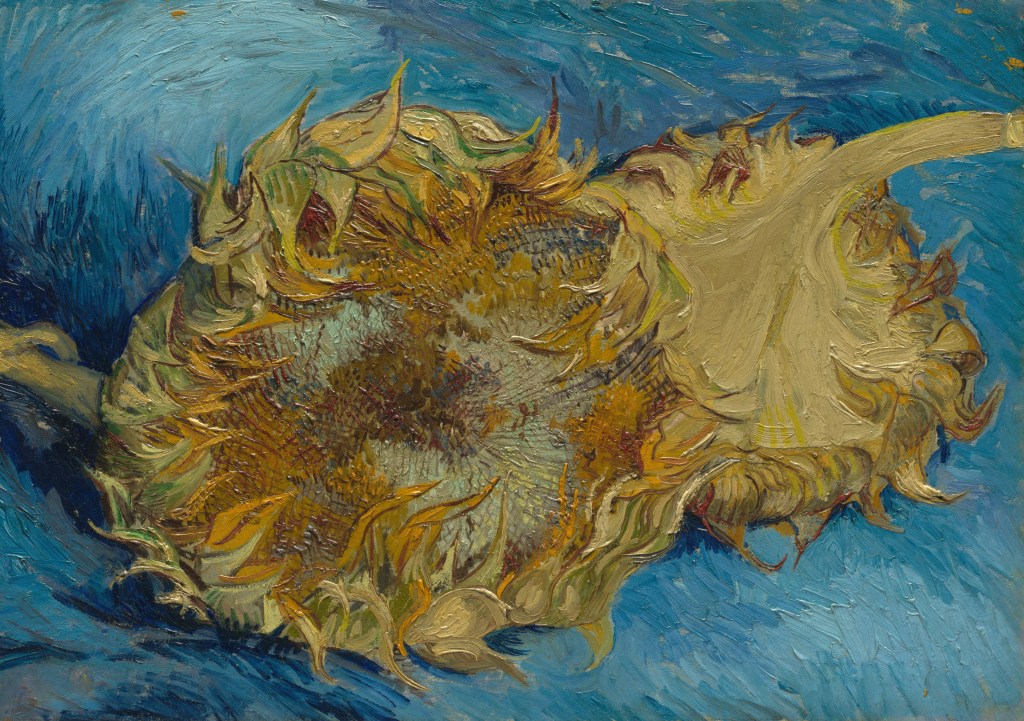
I’ve been reading the letters of Vincent Van Gogh. Thinking about the courage of the artist to stand against the crowd, and yet remain soft enough to be vulnerable to life, to what is.
And I remembered a concert I went to during my freshman year in college. That was 1971-1972 —
Yeah. I know. Back in the age of dinosaurs.
Speaking of dinosaurs: After Vincent Van Gogh abandoned what he had believed was a call to the ministry — a call his preacher father encouraged and supported — he fled to the coal mining region of Belgium known as the Borinage in 1878. There he threw himself body and soul into working and evangelizing among the miners of a village called Wasmes.
That same year, miners near Bernissart, north of Wasmes, struck what they thought at first was gold, then a petrified tree. Perhaps a broken mining tool. But it was none of those.
They had pickaxed into a pocket of clay that had been cradling the bones of dinosaurs — iguanodons — for more than 110 million years.
It was quite a find for the paleontologists. Most of the skeletons were complete, and many of them were adults. No one could explain how more than 30 complete iguanodons should have come to rest more than 322 meters (1,056 feet) below the surface of the earth.
The bones were dug up, carted to the surface. Encrusted with iron pyrite — fools’ gold — they were cleaned. Then with ropes and scaffolding they were hauled into standing positions.
The Bernissart mines were closed for about three years, until a mine manager insisted they be reopened to provide work for living miners.
Van Gogh never mentions the find in his letters. I imagine he was too busy excavating the ruins of his ministerial calling, agonizing over the iron pyrite he had mistaken for gold. “How can I be of use, how can I be of service? There is something inside me — what can it be?” he wrote to his brother Theo. (Letter 133)
Casting about in that dark night of the soul, he staggered into the calling that had been his all along. Hidden in plain sight.
“But I can’t help thinking that the best way of knowing God is to love many things….” (Letter 133)
Which brings me back to the concert in 1971-1972. A story I’ll tell in the form of a poem.
Ballad, Interrupted

Who
thought it
was a good
idea for
Don

McLean
to be
the opening act
for Edgar
Winters’

White
Trash? It
was the fall
of 1971
or

maybe
the spring
of 1972, my
freshman year
in

college.
The room
was cavernous. Empty,
no chairs.
We

sat
on blankets
on the floor.
                     Starry, Starry
                     night….

He
stood on
stage with nothing
but a
guitar

and
amp, a
microphone, his voice.
                     ...with eyes
                     that

                     watch
                     the world
                     and can’t forget….
                     They did
                     not

                     listen.
                     They did
                     not know how.
                     Perhaps they’ll
                     listen

                     now.
Rowdy laughter
swallowed the song.
Shouting and
jeering

ricocheted
from wall
to wall. Bottles
and joints
made

the
rounds. The
smell of weed
tangled with
patchouli

and
unwashed jeans.
                     They did not
                     listen. They
                     did

                     not
                     know how.
                     Perhaps they’ll listen
                     now.                   He
stopped.

“OK,
OK.” He
spat the words
into the
mic.

“I’ll
sing it.”
                      …bye bye, Miss
                      American Pie…
They

cheered
and clapped.
Rock ‘n’ Roll!
they yelled.
They

sang
along. 	              …and
                      good ole boys
                      were drinking
                      whiskey

                      'n’
                      rye   Singin’
                      this’ll be the
                      day that
                      I

                      die.
As he
struck the last
chord, he
spun

to
his right
and stalked off
stage. He
never

looked
back.
(K Bryant Lucas, 2026)
“They did not listen. They’re not listening still. Perhaps they never will.” (Don McLean)
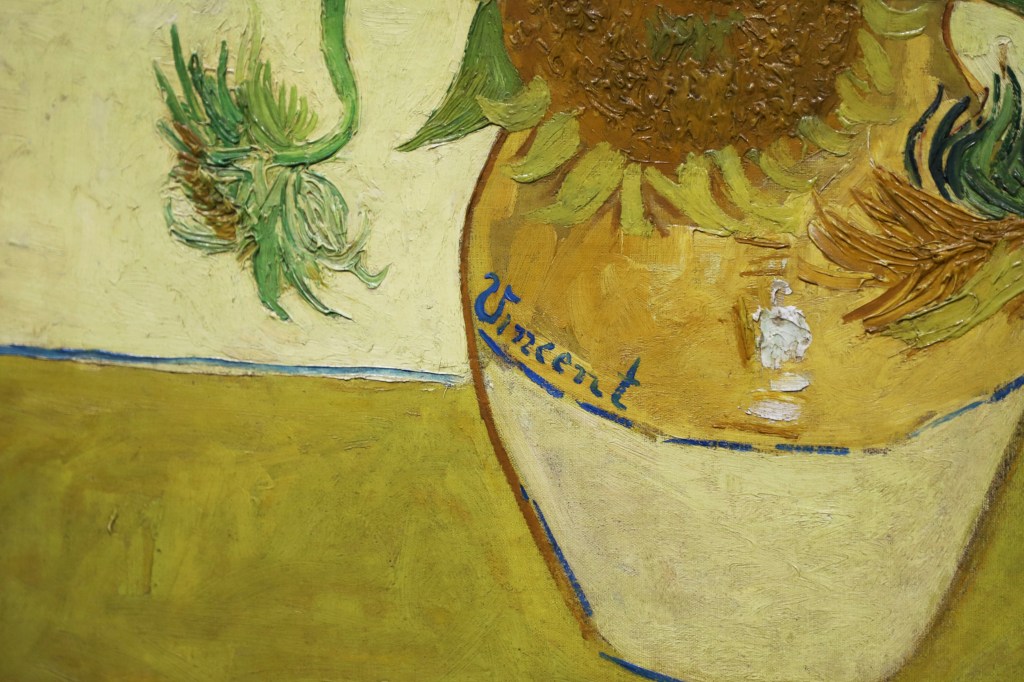
NOTE: The form of my poem is a variation on the hay(na)ku.
The hay(na)ku is a 21st century poetic form invented by Eileen R. Tabios. It is a six-word tercet with the first line being one word, the second line being two words, and the third line being three words.

