The Key to the Town of Wake Forest unlocked nothing.
This is the sixth in a series of excerpts from my memoir, The Edge of All the Light You Have: a story across time and race (formerly From Where I Stand).
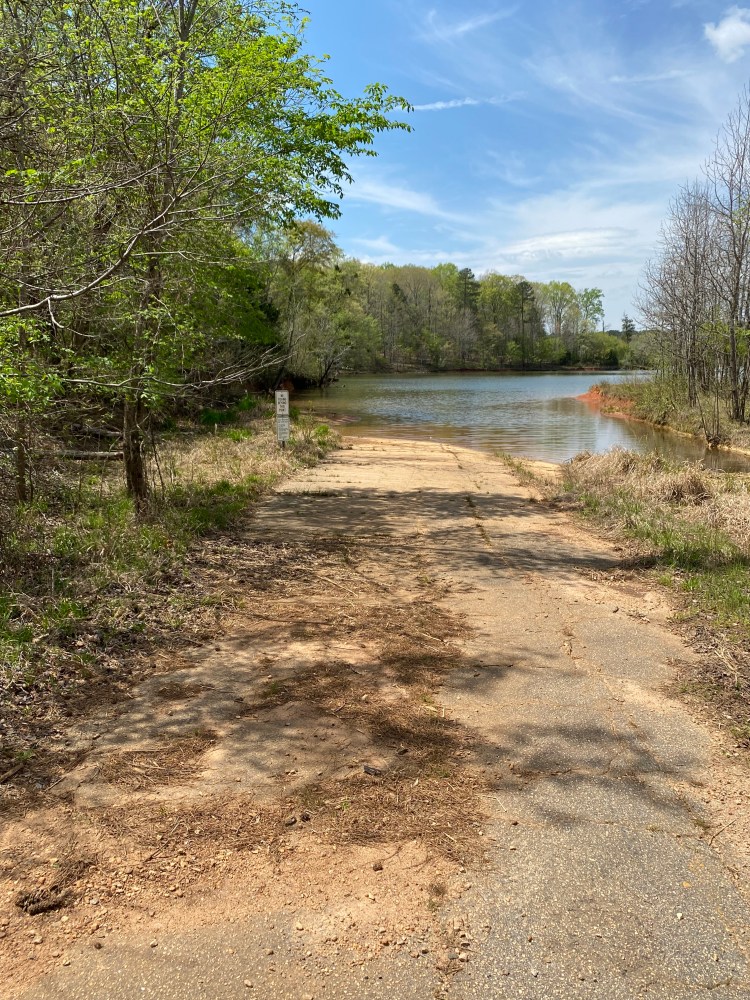
In early June 1999, I found myself on the road connecting New York City and the town of Wake Forest. It was my birthday. I was 46 years old.
Thirty years after the shooting, our family had been invited back to Wake Forest.
First, my brother John was invited to deliver the graduation address for Wake Forest-Rolesville High School–the school we attended as Wake Forest High. Then the town of Wake Forest jumped on the bandwagon, turning the weekend into a series of events honoring us.
A cookout was planned, to which John’s and my friends were to be invited. A ladies’ tea was scheduled for Sunday afternoon. On Sunday morning my father was invited to preach at Wake Forest Baptist Church, and, after the worship service, the mayor decided to present us with the “Key to Wake Forest.”
The whole family planned to show up. Except for my brother Bryant, who said, “Am I the only one in this family who remembers that the Klan is still out there?”
Bob and Liz Ford, who had provided us a place to live after we were turned out of the parsonage, opened their home to us. It felt like a family reunion, returning to the old Powell mansion, where we spent our last five months in Wake Forest in spring of 1970.
After a 7-8 hour drive, I approached Wake Forest from the north on Highway 1A. The old concrete-block four-lane divided highway clacked against my tires. The sticky heat stuck to my face, but I left the windows open. I wanted to breathe the clean air. Green leaves were darkening from the neon colors of spring to the dark and dusty shade of summer. There was a familiar fragrance in the air–boxwood maybe?–that made me feel hopeful somehow. And what a fortunate twist of fate that this reunion was happening on the weekend of my birthday, I thought to myself.
The highway narrowed from four to two lanes and became residential North Main Street with its tree-lined median. As I turned into the Fords’ driveway, memories spilled over into tears.
Since 1980, I had been living in New York City, a universe away from my southern upbringing, studying singing and pursuing a career in opera. Before I left for the weekend event, a close friend, a writer, suggested that I put something on paper about the shooting as a way of centering myself and preparing for my visit. I dashed off a few pages on my mustard-yellow electric typewriter.
My friend and I shared a bench on the east side of Central Park. The cherry trees were past their prime, shedding their luscious blossoms in drifts of pink and white petals. I read to her what I had typed on lined loose-leaf sheets, filled with typos and x’ed-out edits.
When I came to the end, there was a long pause before she spoke.
“Karen,” she said. “You’ve got to write this story.” She copied my raggedy manuscript. She said she wanted to show it to a friend of hers who might help me get the story published in a well-respected magazine.
“Take notes over the weekend,” another writer friend suggested. “Then you can bookend the original story with something about the return to Wake Forest 30 years later.”
The 1999 Wake Forest-Rolesville High graduation ceremony on Saturday took place in an auditorium large enough to swallow the entire population of Wake Forest in 1969. Every seat was filled, either by graduates or family members and friends.
John delivered a heart-wrenching speech that brought me to tears. He talked about what happened the night of the party. He described looking “…from the splintered wood paneling to the terrible expression on my father’s face.” He said that the integration of Wake Forest High “did not present a problem for us, because we had been taught that God loved all of his creation, and that our challenge was to love each other, and that love knew no barrier of class or financial status or race.” He sang the praises of the Black congregations in North Carolina who extended “invitations that were a world of education to me culturally, musically, spiritually, and emotionally….”
“You know,” he added, “we didn’t come to Wake Forest to make a big stand on race relations. My father was on a spiritual quest—following the Guiding Principle of the Love of God for all people—and in following that principle we lived ourselves into a life statement.”
He challenged them, “So, what is your Guiding Principle?”
As he neared the end of his speech, John said, “The question mark of civil rights will not become an exclamation point until all brothers and sisters can join hands—red and yellow, black and white, gay-straight, male-female, rich and poor—and make their contribution to life with dignity and respect and compassion.”
Then he invited me to come up on the stage—something we had prearranged—to sing part of a song from the 1970 movie Goodbye, Mr. Chips:
And the question I shall ask, only you can answer:
Was I brave and strong and true?
Did I fill the world with love my whole life through?
We both wept, as people in the packed auditorium rose to their feet, clapping and cheering.
“The question mark of civil rights will not become an exclamation point until all brothers and sisters can join hands—red and yellow, black and white, gay-straight, male-female, rich and poor—and make their contribution to life with dignity and respect and compassion.”
The cookout was at the home of the senior class president who invited John to speak. Their house was in one of those new communities where was still a yard around the house and space between houses. A few stairs led up to a wide porch. The floors inside were polished hardwood, and flat arches opened into room after room. The house was full of people and excited chatter.
Let me be honest: I had conflicted feelings about being there. Something about the eagerness to honor us did not ring true to me.
For one thing, none of my Black friends from 30 years before were there. In fact, Marjie Boal was the only real friend of mine who was at the cookout.
Marjie was also, as it turned out, the only one who had made any attempt to contact our Black classmates. The white classmate who was given responsibility for the guest list had never been a particular friend of mine, either before or after the shooting.
And many of the former classmates who showed up were the white students who had shunned me—including the daughter of the deputy sheriff who came out to the parsonage the night of December 13. She was there with her husband, a close relation of the Woodliefs.
Why are any of you here? I thought. I wish now that I had asked them point-blank.
Instead, I limited my protest to dressing in loose black jeans and a shapeless and faded black T-shirt. A man’s gray work shirt, sleeves cut off, ragged and frayed, topped the outfit–something I might wear on the streets of NYC on an off day. My hair reached to middle of my back. I pulled it straight back off my face into a ponytail, exposing the silver cuff I wore on my right ear and long dangling silver-filigree earrings from Indonesia that I bought from a street vendor. No make-up.
Everything was engineered to stake my claim to a world that clashed with theirs. A quick glance around the room confirmed what I already knew: I looked nothing like the other women my age in their sweet pastels, their eyelashes mascaraed with meticulous care, and their cheeks layered in powdered blush.
My rebellious, conflicted spirit was pleased.
Marjie arranged for a visit with some of our Black friends. Many had moved out of town. Warren Massenburg, who had worked with me on the staff of the high school newspaper and written some searing articles on racism, called me from Richmond, Virginia, where he was living and working as a Baptist pastor. Three of the Black friends who came to the 1969 party, Mike, Silas, and Marjorie, had also moved away.
William Lucas, still living in town, never returned Marjie’s call.
Marjie and I met Bettie (Edwards) Murchison, Pam (Jones) Leathers, and Pam’s mother, Mrs. Evelyn Jones, on the campus of the old W.E.B. DuBois High School. After the name was changed to Wake Forest-Rolesville Middle School for the first few years of desegregation, the buildings had been abandoned. The auditorium where we snapped photos together was in complete disrepair. Bettie told me that they were trying to raise funds to turn it into a cultural center.
Afterwards, Marjie and I drove out NC Highway 98 to see Ridgecrest Baptist Church. We tried the doors—they were locked. We circled around the back of the building and peered through the windows into the Sunday School rooms downstairs. I took photos of the church, the sign.
Then we turned onto Stony Hill Road. At the time, the parsonage was still there. From the side of the road, I snapped photos of the house that was supposed to have been our home. It looked much smaller than I remembered.
We made a U-turn to go back into town. Along a left-over fragment of the old NC Highway 98, new mini-mansions were going up next to cleared red clay lots where others were about to be built. We followed the road to where it dead-ended, without ceremony, at a gate with a leaning Stop sign. More photos.
We didn’t notice the small white car that had followed us into the dead end until we turned to leave. Other than our two vehicles, the spot was deserted. Wary and alert, Marjie and I returned to our car–at which point the other one made a rapid U-turn and sped ahead of us back up toward the highway.
And that’s when I remembered Bryant’s warning about the Klan.
The next day Dad preached at Wake Forest Baptist Church. Both The News and Observer and The Wake Weekly were on hand to capture the moment when the mayor presented my mother with the humongous Key to Wake Forest. In the photos, Mom looks at Mayor George Mackie. Her expression makes me think of parched ground that is at last being watered. To see it still breaks my heart.
The afternoon tea featured white ladies in beige dresses or florals in pastel shades, sitting around tables with cups of delicate china and finger sandwiches on crystal plates. In the photos, we are all smiling and oh so polite.
My costume was what Granny would have a called a “loud” jacket covered with garish purple, orange, red, and goldenrod-yellow flowers. Underneath, I wore a purple tee and matching shorts that came to an end above the knee. My hair hung loose, and again, I wore no make-up. Again I did not fit in–which, again, pleased me.
I see now that my clothes–ragged to the point of giving offense or in bold colors that pushed back against the lady-like prints–carried the burden of thoughts and emotions I did not feel free to express.
Most of the weekend, however, I spent upstairs in the room I was assigned in the Fords’ house, sobbing with fury. My body ached with trauma I had never acknowledged or addressed. The weekend was a personal hell for me. I came downstairs only when absolutely necessary.
I see now that my clothes–ragged to the point of giving offense or in bold colors that pushed back against the lady-like prints–carried the burden of thoughts and emotions I did not feel free to express.
Looking back, I think that Wake Forest was eager to whitewash the past in 1999. As if it were enough to smooth down the rough edges, slap on a fresh coat of paint.
As if racist violence and the price paid by my family and friends, both white and Black, could be attended to with a pat on the head and a treat, and then dismissed. Oopsy-daisy!
As if a few nice words were enough to settle the score and address the on-going pervasiveness of white supremacy. There, there. All better now!
As if surface reconciliation were all we needed.
Which reminds me of something I heard a Black attendee say at a conference on racism: “How can we be reconciled when we were never ’conciled?”
“How can we be reconciled when we were never ’conciled?”
The Key to Wake Forest unlocked nothing. My mother hung onto it, and then my father. Where it is now, I have no idea.
When I arrived back home in New York City, I put what I had written for my friend into a folder and tucked it into the back of a gray filing cabinet I had reclaimed from the street. Over the years I made a few scribbles here and there, but nothing I wrote led anywhere. I did not have the heart to flesh out the story, or bookend it, or anything.
It would be another 20 years plus before I came back to the page. By that point, Wake Forest had–at least on the surface–completely changed.
If you want to know more about this story, check out “You going to that party?” and “I thought they would come for me.”


Oh, my. Everytime I read it, there’s the same powerful punch. ________________________________
LikeLike
Bless you!
LikeLike